
Choosing the right care for your child is one of the biggest decisions a family can make. Whether you’re a working parent in Melbourne’s southeast or new to the area, finding trustworthy child care in Lyndhurst matters more than ever. Two of the most common options are family day care and long day care, and each suits different family needs.
Understanding how these two models differ can help you make a confident choice for your little one. In this article, we’ll compare both settings, look at what to expect from each, and help you decide which one will support your child’s growth, comfort and daily routine best.
What Is Family Day Care?
Family day care is a home-based education and care model. A registered educator looks after a small group of children in a residential home, following an approved curriculum under the National Quality Framework.
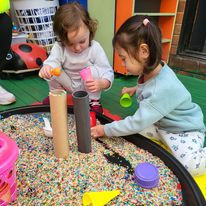
Because the group is small, children often settle in quickly. Routines feel more like home life, with time for rest, play and meals happening in a familiar, relaxed setting.
Many parents choose this option for babies and toddlers who benefit from a calmer, more personal environment during their early years.
Educators are trained, police-checked and regularly monitored, so families can feel confident their child is in safe, capable hands. Meals, nappy changes and rest times are usually built around each child’s own needs rather than a fixed group schedule.
Siblings can often stay together in the same home-based setting too, which some families find reassuring, especially when children are close in age and used to spending time together.
What Is Long Day Care?
Long day care takes place in a purpose-built centre, sometimes called an early learning centre. These centres usually care for larger numbers of children, grouped by age, with a team of educators working across the day.
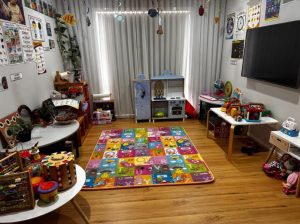
Centres often have dedicated outdoor play areas, larger indoor spaces and set daily programs. This structure can suit children who enjoy being around bigger groups of peers.
Long day care centres typically operate set opening hours throughout the year, with a consistent timetable of activities for each age group.
Centres also employ qualified early childhood teachers alongside educators, and many run structured programs designed to prepare older toddlers for the transition to school.
Comparing Group Sizes and Individual Attention
One of the clearest differences between the two models is group size. Family day care generally keeps educator-to-child ratios low, meaning your child gets more one-on-one attention throughout the day.
Long day care centres, while still following strict ratio requirements, usually involve larger overall numbers. Children rotate through different rooms as they grow, meeting new educators along the way.
If your child is shy, sensitive to noise, or still settling into care, a smaller setting may feel gentler. Children who thrive in busier, social environments may enjoy a centre instead.
It’s also worth thinking about how your child interacts in group settings now. A child who already enjoys playgroups and busy playgrounds may adjust well to a centre, while a child who prefers one or two close friends might flourish in a smaller family day care group.
Comparing Routine, Flexibility and Hours
Family day care often offers more flexibility around hours, including early starts, later pick-ups, or part-time arrangements that fit around shift work or irregular schedules.
Because it takes place in a home, the daily rhythm can also be adjusted more easily to suit a child’s sleep needs, feeding times or individual temperament.
Long day care centres tend to run on fixed opening hours and a set weekly program. This consistency can help some children settle into predictable daily transitions.
For families juggling early starts, late finishes or unpredictable rosters, the flexibility of a home-based educator can make a real difference to day-to-day stress levels. It’s worth asking any provider directly about their opening hours, closure days and how they handle public holidays.
Cost and Subsidy Considerations
Both family day care and centre-based child care are eligible for the Child Care Subsidy (CCS), which can significantly reduce out-of-pocket fees for eligible families.
Actual costs vary depending on hours booked, location and the provider. It’s worth comparing fee structures and asking each provider how CCS is applied to your sessions.
Many families find that once the subsidy is applied, the difference in cost between a home-based educator and a centre becomes smaller than expected.
It’s a good idea to request a written quote from any provider you’re considering, including standard daily rates and any additional charges for meals, nappies or excursions, so you can compare like for like.
Which Option Suits Your Family?
There’s no single right answer. Some families prefer the homely feel and flexible hours of family day care centres, while others prefer the structure and social opportunities of a larger centre.
Think about your child’s personality, your work hours, and how far you’re willing to travel. Visiting in person and asking questions about daily routines will tell you far more than a website ever can.
Wherever you land, quality kids early learning experiences in the early years help build the confidence and social skills your child will carry into school.
It can also help to talk to other local parents about their own experiences, since word of mouth often reveals details about day-to-day culture that a brochure won’t cover.
Making the Right Choice for Your Child
Family day care and long day care both offer genuine benefits, and the better fit really comes down to your child’s needs and your family’s routine. Smaller, home-based settings suit families wanting flexibility and a gentle, personal touch, while centre-based care suits those who prefer structure and a bigger social circle.
Take the time to visit, ask questions, and trust your instincts. The right environment is one where your child feels safe, engaged and happy to arrive each day.
It also helps to think a few years ahead. If you’re likely to need care for more than one child, or you expect your work hours to change, ask providers how easily arrangements can flex over time. A setting that can grow with your family often saves a stressful search down the track.
Get in Touch with First Idea Family Day Care
If you’re weighing up child care in Lyndhurst and would like to see whether a home-based setting suits your family, First Idea Family Day Care would love to hear from you. We support families across Doveton, Clyde, Hallam, Cranbourne, Endeavour Hills, Lynbrook, Dandenong, Keysborough, Hampton Park and Carrum Downs.
Give our friendly team a call on 03 9793 9502 to ask about availability, meet our educators, or arrange a visit. We’re happy to answer any questions and help you find the right fit for your child.
 Between long day care centres, nannies, and in-home options, the choices can feel overwhelming. For many families searching for
  and supported in an early learning setting. When children grow up alongside peers from different backgrounds, abilities, and family structures, they develop empathy, flexibility, and a genuine appreciation for the world as it actually is. Quality
  For parents, it can feel equal parts exciting and nerve-wracking. The question that comes up time and again is deceptively simple: is my child actually ready? The answer goes far beyond knowing a few letters or being able to hold a pencil. True school readiness covers emotional regulation, social skills, independence, communication, and physical development. Families who have connected with
  Whether your child is starting early learning for the first time or you are simply looking to make a change, finding a trustworthy and nurturing environment matters enormously. Families searching for
  them. Emotional and social development begins long before formal schooling and is strongly influenced by the environments children are exposed to. In
  Early learning centres provide children with opportunities to develop socially, emotionally, and cognitively through structured routines, play-based activities, and supportive relationships. When parents understand how a